


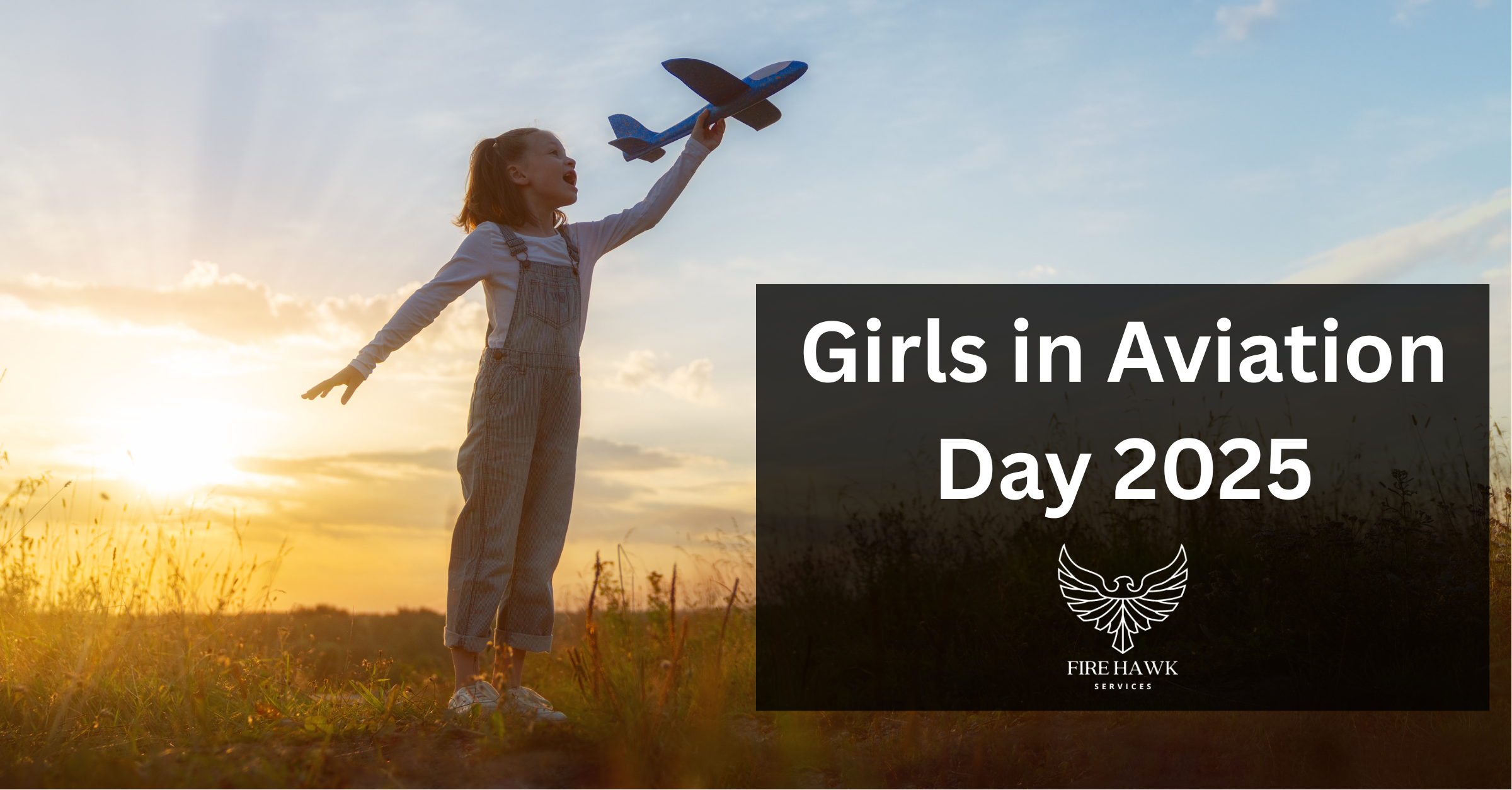
Girls in Aviation Day (GIAD) ran on Saturday, 20 September 2025, led by Women in Aviation International (WAI) and delivered by chapters and industry partners worldwide. The idea is straightforward: open hangars, cockpits and operations rooms so girls can see real jobs, meet the people who do them, and understand the steps to get there.
Women in Aviation - Australia
Australia has a long history of women who pushed aviation forward. Lores Bonney flew solo from Australia to England in 1933 and set multiple distance records. Nancy‑Bird Walton built services for remote communities and founded the Australian Women Pilots’ Association in 1950. Decades later, Deborah Lawrie won a landmark discrimination case against Ansett, becoming the first woman to fly for a major Australian airline and opening the door for others.
Women in Aviation International’s Australian Chapter (WAI Australia) was established in 2015 and coordinates Girls in Aviation Day (GIAD) activities nationally with airports, airlines, flight schools, museums and defence partners. Since its formation, WAI Australia and industry partners have run GIAD programs across multiple states, giving students hands‑on exposure to roles from flight operations and engineering to air traffic control and maintenance. (See this year’s Australian examples below.)
GIAD 2025 in Australia
GIAD 2025 included more than 190 events worldwide. In Brisbane, United Airlines and Brisbane Airport hosted senior secondary students from Aerospace Gateway to Industry Schools on Friday, 19 September 2025. Students toured the international terminal and ramp operations, met inflight and technical teams, and spent time onboard a Boeing 787‑9.
In Melbourne, Essendon Fields and the Women in Aviation Australia Chapter ran a GIAD program at Melbourne Heli, Hangar 7, where high‑school students spoke with pilots, engineers, controllers and maintainers, and explored training pathways with local providers.
Why Women in Aviation Matters
Aviation still has a participation gap. Women make up roughly half the population, yet only about 6% of pilots globally are women (WAI industry stats). In Australia, large employers report similar shares. At the same time, demand for skilled people is growing: Boeing’s 2025–2044 outlook projects the need for 2.4 million new aviation professionals worldwide, including 660,000 pilots (Boeing Pilot & Technician Outlook; see also the PTO overview). Girls deserve the same opportunities to see, try and train for aviation careers as boys. GIAD helps close this access gap through practical exposure and mentoring. Widening the talent pipeline is practical and strengthens safety culture and decision-making.
Gender diversity also matters for how teams work. Crew Resource Management is built on clear communication and psychological safety; this is a recurring theme in EASA’s safety‑promotion material on CRM (EASA CRM). Sector guidance from EUROCONTROL and EASA links inclusion with stronger organisational performance and safety culture (EUROCONTROL/EASA DEI toolkit). In air traffic management, DEI is likewise tied to safety and long‑term workforce supply (Skybrary DEI rationale).
Expanding Participation
Girls in Aviation Day gives girls real exposure to aviation. Aviation organisations can build on that with a few focused actions:
- Exposure. Partner with WAI or a local chapter to host or support GIAD. Offer aircraft walk‑arounds, simulator time, and airport or ATC tours. Keep events free and accessible.
- Pathways. Provide mentoring and sponsorship, paid cadetships and internships, targeted scholarships, and links with schools, TAFEs and universities so students can see a clear route into jobs.
- Workplace. Recruit and promote with transparent criteria and mixed panels. Support flexible rostering and return‑to‑work. Ensure safe reporting, anti‑harassment processes, correctly sized PPE, and suitable facilities.
- Accountability. Set targets, measure outcomes, and share results so progress is visible and sustained.
Conclusion and Next Steps
Girls deserve the same opportunities to see, try and train for aviation careers as boys. Girls in Aviation Day helps close this access gap through practical exposure and mentoring. Fire Hawk Services supports women in aviation and the principles of GIAD. If your organisation wants to support GIAD, start by contacting Women in Aviation International or your local WAI chapter to host or partner on an event. Then consider:
- Offering site visits, shadowing days and work experience
- Providing access to aircraft, simulators and airport/ATC tours
- Supporting scholarships, cadetships and mentoring
- Working with schools and community programs year‑round
- Tying inclusion goals to safety culture and leadership accountability, and measuring progress
Share your experience
If you hosted or attended a Girls in Aviation Day activity in Australia, what were the highlights?
Publication Note: AI tools were used to assist with researching, structuring and editing for clarity. All views expressed are those of the author(s). [Ensure this is included and adjusted as appropriate]
Sources
- WAI press release (9 Sep 2025): WAI Celebrates 11th Annual International Girls in Aviation Day (date, global footprint, activities). https://www.wai.org/news/wai-celebrates-11th-annual-international-girls-in-aviation-day
- WAI stats: Industry Stats page (global pilots ≈6%). https://www.wai.org/industry-stats
- Boeing workforce outlook: 2025 Pilot & Technician Outlook — Executive Summary and full report (global demand incl. 660,000 pilots). https://www.boeing.com/content/dam/boeing/boeingdotcom/market/assets/downloads/2025-pto-executive-summary.pdf ; https://www.boeing.com/content/dam/boeing/boeingdotcom/market/assets/downloads/2025-pto-download.pdf
- CRM and safety culture: EASA Crew Resource Management safety‑promotion hub. https://www.easa.europa.eu/en/safety-promotion-publication-type/crew-resource-management
- DEI and safety/organisational performance: EUROCONTROL/EASA Diversity, Equity & Inclusion Toolkit (PDF). https://www.eurocontrol.int/sites/default/files/2025-01/dei-toolkit-v1-november-2024.pdf
- ATM context: Skybrary Rationale to build a DEI culture in ATM. https://skybrary.aero/bookshelf/rationale-build-diversity-equality-and-inclusion-culture-atm
- Australia — WAI Chapter: About Us (WAI Australia established 2015). https://waiaustralia.org/about-us/
- Brisbane program: Aerospace Gateway to Industry Schools GIAD invitation, 19 Sep 2025. https://aerospacegatewayschools.com.au/wp-content/uploads/2025/07/2025-GIAD-invitation.pdf
- Essendon Fields event (Melbourne): GIAD at Melbourne Heli, 11 Oct 2025. https://ef.com.au/whats-on/girls-in-aviation-day/
- Lores Bonney: Australian Geographic profile; Australian Dictionary of Biography entry. https://www.australiangeographic.com.au/history-culture/2017/03/lores-bonney-the-forgotten-aviatrix/ ; https://adb.anu.edu.au/biography/bonney-maude-rose-lores-27042
- Nancy‑Bird Walton / AWPA: AWPA About Us (history and founding, 1950). https://awpa.org.au/about-us/
- Deborah Lawrie: ABC feature on the Ansett case and milestone. https://www.abc.net.au/news/2019-06-19/ansett-discrimination-history-australias-first-female-pilot/11207292
- Australia participation context: ABC reporting on women in piloting careers and the pipeline. https://www.abc.net.au/news/2022-04-14/next-generation-of-pilots-women-aviatrix-australia/100895430